
A four-week online course for demand planners, analysts and data scientists. Learn how forecasting models actually work, when to use them, and how to turn forecasts into better decisions.
- When: four weeks in November 2026, every Tuesday and Thursday from 2pm to 4pm UK time
- Format: eight live sessions, two per week, two hours each
- Where: online, delivered on Zoom
- Languages: workshop materials in both R and Python
- Price: £750 per person, or £600 each for two or more
- Students: PhD and Master students pay £500 — contact us from your university address
- Certificate: OpenForecast certificate on completion
Why this course
We teach business forecasting fundamentals in its language.
We teach forecasting fundamentals
You will learn how to model real problems, not just how to call a function. Understanding why a model behaves the way it does is what makes you able to defend a forecast.
We cover the business context
Forecasts exist to support decisions. We discuss the conventional approaches used in industry, where they hold up, and where they quietly fail.
We know applied forecasting
This course is not taught in a vacuum. We work with organisations on these problems and bring that experience into the sessions.
We go beyond the software
Examples use real demand data and the problems that appear in practice — not tidy textbook series. You will be able to apply that judgement in whatever tool your organisation uses.
Who is the course for?
The course is aimed at people who produce, review or rely on demand forecasts in practice:
- Demand planners and forecasting analysts who want to understand the models behind their numbers
- Data scientists moving into demand forecasting from a general analytics background
- Supply chain and inventory professionals who need forecasts they can trust and challenge
- Anyone responsible for forecast quality who wants a principled basis for improving it
Course content
Eight sessions across four weeks, one topic per session.
Week one — Foundations
Session 1 · Introduction to forecasting
- What to do and what not to do in forecasting
- Forecasting in a business context
- Time series components and classical decomposition
- How forecasts inform decisions
Session 2 · Simple forecasting methods
- Naïve, Global Average and Moving Average
- Exponential smoothing
- Why simple methods are hard to beat, and when they are not enough
Week two — The ETS framework
Session 3 · ETS, part one
- Introduction to the ETS model
- Holt, Holt-Winters and damped trend methods
- How these methods connect to the underlying ETS model
Session 4 · ETS, part two
- ETS with explanatory variables
- Model selection within the ETS family
- Producing and interpreting prediction intervals
Week three — Difficult demand and honest evaluation
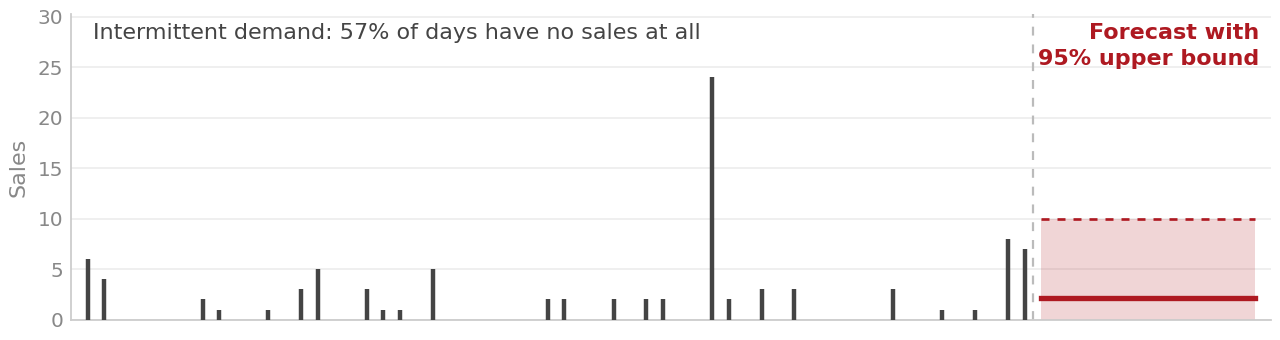
Session 5 · Intermittent demand
- What makes intermittent demand different from the regular one
- Methods for intermittent demand forecasting
- Implications for spare parts and inventory management
Session 6 · Forecast evaluation
- Evaluating forecasting accuracy via error measures
- Uncertainty, prediction intervals and their evaluation
- Choosing measures that reflect the decision being made
Week four — People and practice
Session 7 · Judgement
- Judgemental forecasting and judgemental adjustments
- When human input helps and when it harms
- Organisational aspects of the forecasting process
Session 8 · Combinations
- Combination of forecasts
- Model and forecast selection
- Building a forecasting approach that holds up over time
Workshops between sessions
Exercises in R or Python, reviewed at the start of the following session.
Each session is paired with a workshop you complete in your own time. The exercises use the same data and follow the same structure in both languages, so you can work in R or Python without missing anything.
Every session opens with a short workshop review: we work through the previous exercise together, take questions, and cover the points people found difficult. The workshops are where the material becomes yours, and the review is where anything unclear gets resolved.
What you will be able to do
- Apply core forecasting principles to real demand data
- Identify time series components and analyse time series structure
- Understand how forecasting models work and what their parameters mean
- Produce point forecasts and prediction intervals for any time series
- Forecast intermittent demand appropriately, across its different patterns
- Evaluate the accuracy of different forecasting methods honestly
- Make sound managerial decisions based on point and interval forecasts
Meet your tutors
Taught by the people who wrote the methods and the software.

Ivan Svetunkov
Spent more than a decade teaching forecasting and statistics at Lancaster University, latterly as Senior Lecturer and Director of the Centre for Marketing Analytics and Forecasting. Author of the ADAM monograph and creator of the smooth and greybox packages.

Nikolaos Kourentzes
One of the most cited researchers in business forecasting and co-author of Principles of Business Forecasting. Formerly Professor at the University of Skövde and Lancaster University, now at Indicio Technologies.
Co-organised with Lancaster CMAF

This course is co-organised with the Centre for Marketing Analytics and Forecasting at Lancaster University Management School, where the material was originally developed and taught. Members of the Centre will contribute to the teaching of future cohorts, and the course draws directly on CMAF’s research on forecasting in practice.
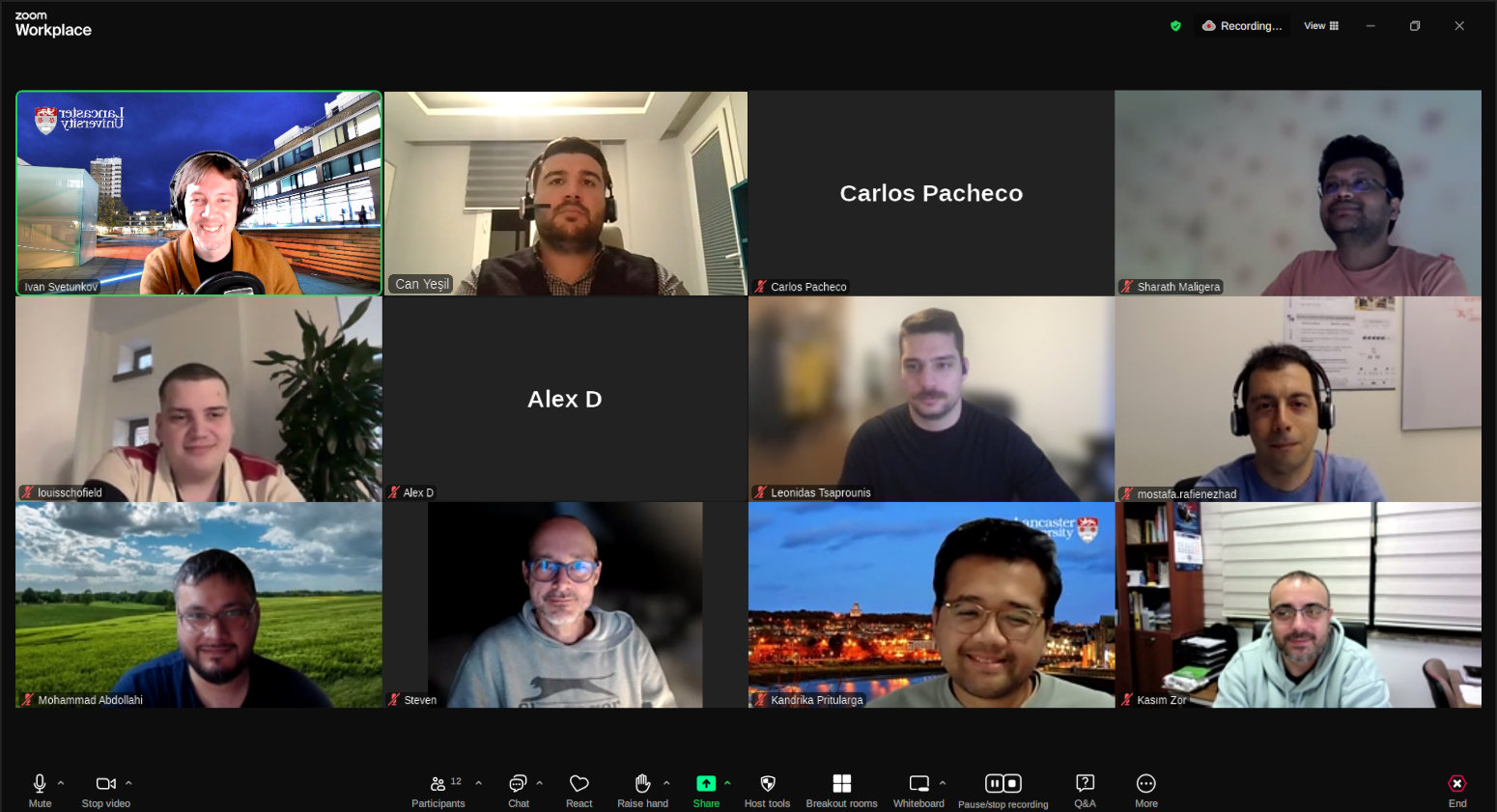
Delivered on Zoom
Sessions are live. We present the material, work through examples, and discuss how forecasting applies to a range of cases, with both tutors available to help at every step. Sessions are interactive, and questions are welcome throughout.
What previous attendees say
The course used real-life examples with strong underpinning theories. The course provided well-rounded teaching materials, and the tutors are knowledgeable. I appreciated the tutors taking time for Questions and Answers.
The tutors are true experts in statistical forecasting models. Their insights on the simplest aspects of the field were valuable, even for a seasoned practitioner like myself. This course gave me a better understanding of forecasting methods and best practices.
The course had the right blend of judgemental and statistical forecasting, with sufficient detail on methods, their differences and practical applications. I found the explanations of the models simple, clear and easy to follow, and particularly enjoyed the intermittent demand forecasting sessions. Overall, it was comprehensive, well-paced, with memorable examples, and catered to both academic and industry participants.
Course prerequisites
You do not need to know forecasting
We teach it from first principles. Experienced practitioners will still find plenty that is new.
You are not expected to know statistics
We explain the essentials as they come up.
You do not need to be a programming expert
Basic familiarity with R or Python is helpful for the workshops, and we provide introductory materials if you are new to either. We will support you throughout.
Register
£750 per person, £600 each for two or more, £500 for students.
Student booking
PhD and Master students. Write to us from your university address and we will send a booking link.
Prefer to pay by invoice? Email mail@openforecast.org and we will send one directly.
Questions?
If you are not sure whether the course is right for you or your team, get in touch and we will tell you honestly. Contact us.