

We help companies get their stock levels right — distributors, manufacturers, spare parts operations, retailers. We start by understanding how your process actually runs and measuring how accurate the forecasts really are. What the measurement finds is usually not what people expect:
- Demand hidden by stockouts. Sales history records a zero when you had nothing to sell, and the model learns that nobody wanted it.
- Error measures that reward the wrong thing. A forecast can score well on accuracy and still be the wrong input for the decision it feeds.
- Safety stock set by convention. Service targets chosen by habit rather than calculation, costing money at both ends.
- Models that cannot represent your demand. A promotion, a price change, or a large amount of slow movers break tools built for steady weekly sales, and no amount of tuning fixes a model that was developed for a different situation.
- A process built around the software, not the decision. Forecasts produced with arbitrary periodicity, not aligning with the ordering decisions, at a level of aggregation nobody uses, for a horizon that does not match the lead time.
- Overrides nobody tracks. When the system is not trusted, planners adjust by hand — and most of those adjustments make the forecast worse.
If any of that sounds familiar, a conversation is the cheapest way to find out how much it is costing you.
The problem we solve
Most demand planning runs on tools that quietly cost money. Typical forecasting engines extrapolate the past and break the moment a promotion, price change, or supply disruption enters the picture — which is why replacing the engine rarely fixes much on its own.
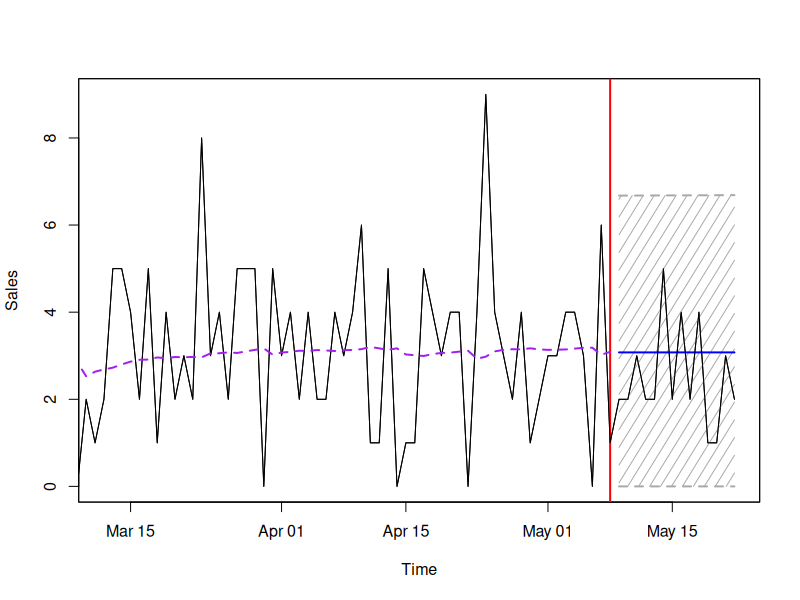
We work through the whole analytics chain: a thorough analysis of how your operations actually run, then data cleaning and processing, then aligning the evaluation setup with the decisions the forecasts feed, and only then the forecasting and inventory models themselves.
What we do
Consulting
Most engagements start with a diagnostic: we map how forecasting and replenishment actually work in your company, measure how accurate the forecasts are, and report what the gaps are costing you. About a month of analysis and writing the report, scoped against SKU count and the state of your data.
What follows depends on what the diagnostic finds — cleaning and restructuring the data, rebuilding the models, resetting safety stock rules, or training your team to do it themselves.
For companies running anywhere from a few hundred to several hundred thousand SKUs, usually with a mix of fast and slow movers.
Practitioner training
Courses in demand forecasting, inventory management, statistics, and analytics — built on a decade of executive training we developed and delivered at Lancaster University. Your planning team learns not just which buttons to press, but why the methods work.
Our next open course, Demand Forecasting Principles, runs online across four weeks, check specific dates. We also run bespoke training for teams of six or more.
For planners and analysts who produce or review forecasts.
Why OpenForecast
Research-grade methods, in the open
Our work runs on the open-source forecasting packages we build and maintain — smooth, greybox and others — grounded in a published methodology (ADAM), benchmarked on international forecasting competition data, and used by analysts worldwide. You can inspect exactly what our methods do before you ever hire us.
The right method, not the fashionable one
We use machine learning where it earns its place, and statistical models where they do. Neural networks and gradient boosting beat conventional approaches on some problems and lose badly on others, particularly with short histories or sparse demand. Knowing which case you are in is the expertise.
Explainable models
You can see the logic, explain the numbers to finance, and stand behind the plan. Where a less interpretable model is genuinely better, we say so and explain what you gain and give up.
Academic rigour, practitioner focus
OpenForecast is led by Ivan Svetunkov and Nikolaos Kourentzes — forecasting researchers with decades of published work between them and years of experience making forecasting work in practice, not in slides. We wrote the methods, built the software, and teach the courses. More about us →
The tutors are true experts in statistical forecasting models. Their insights on the simplest aspects of the field were valuable, even for a seasoned practitioner like myself.
Everything we know, published
Our methods are not proprietary secrets. Two books, a decade of articles, and full documentation are freely available — you can read exactly how we work before you ever hire us. Start with the resources, explore the packages, or read the blog.
Recent from the blog
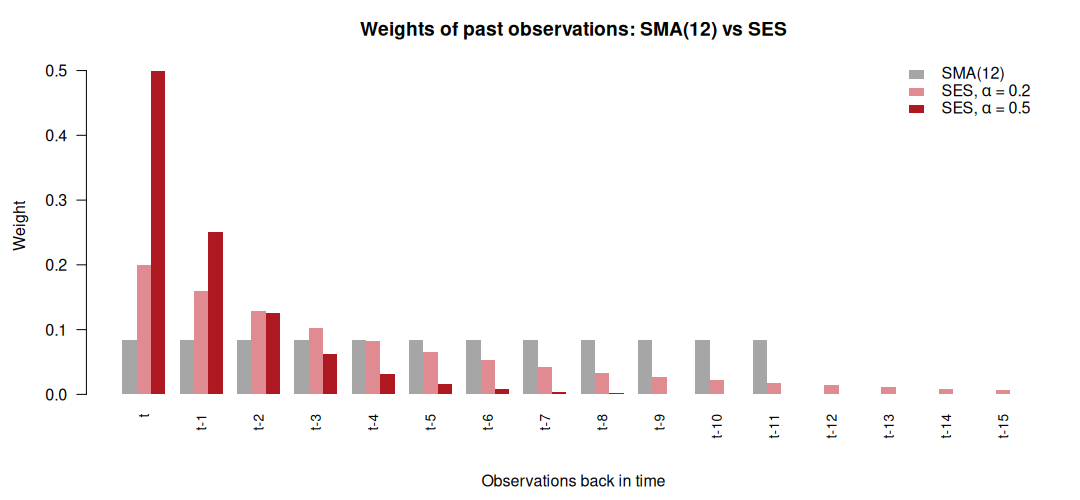
Simple Exponential Smoothing: one parameter instead of many weights
In one of the comments to my previous post about the Simple Moving Average on LinkedIn, a reader mentioned that they use a Weighted Moving Average with their own weighting scheme. This can work well although defining the weights can be a nuisance: a Weighted Moving Average of order 12 needs 12 weights that someone … Read more
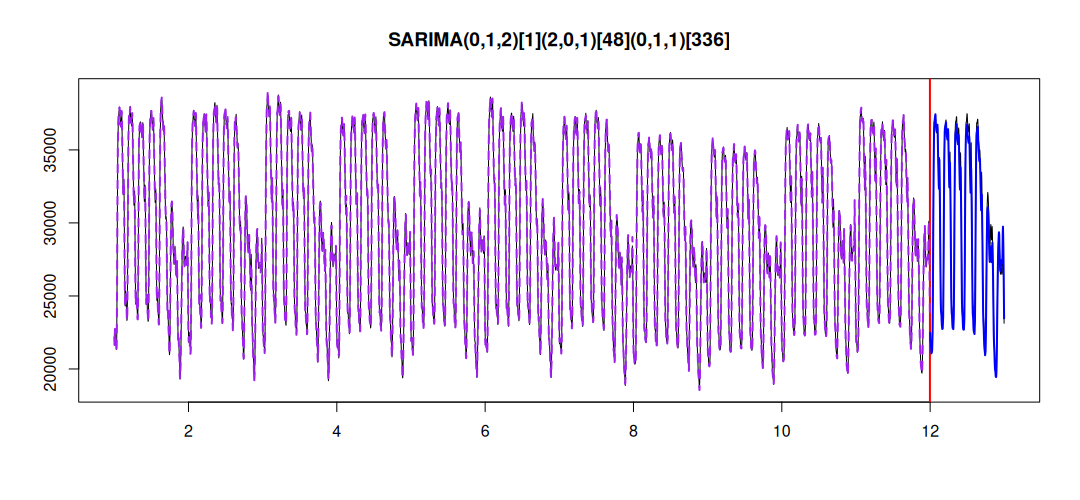
smooth for Python: Automatic order selection for MSARIMA
Have you ever tried to identify ARIMA for your data? The old school Box-Jenkins methodology implies analysing ACF/PACF plots and selecting the orders iteratively. This approach has a fundamental flaw I discussed in one of my earlier posts. Brute force does not help either: even p ≤ 3, d ≤ 2, q ≤ 3 gives … Read more
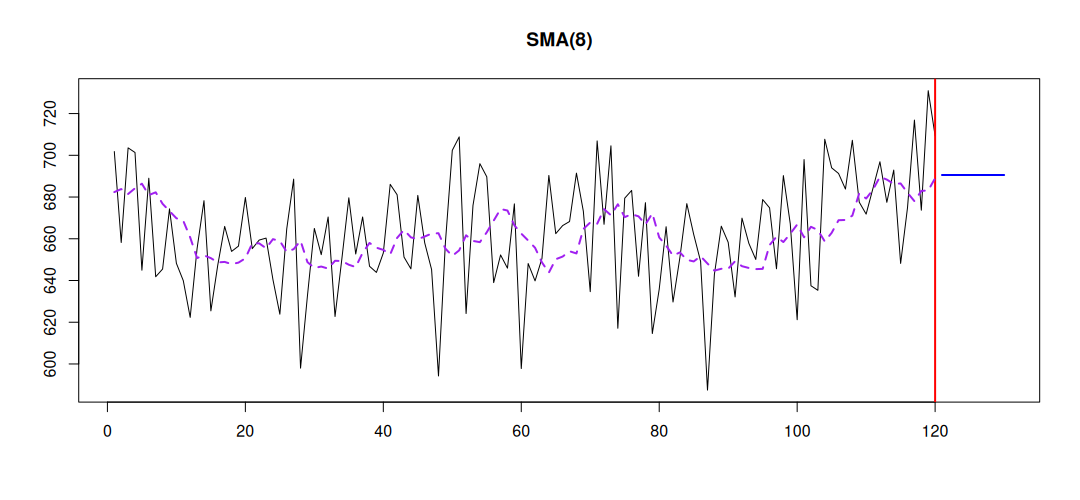
The Menace of ML: Simple Moving Average
And here is another forecasting method that is hard to beat in practice. In a recent competition, it gave data scientists huge headaches and even outperformed some powerful ML methods. What’s the name of this beast?! Simple Moving Average! The idea behind the Simple Moving Average (SMA) is to take the average of the last … Read more
If your forecasts drive real inventory decisions, we should talk.
Book a free 30-minute intro call — no preparation needed. We will ask about your situation and tell you honestly whether and how we can help.
Prefer to write? Send us a message