Hans Levenbach’s classification scheme for trend/seasonal components
Seasonal profile of the data

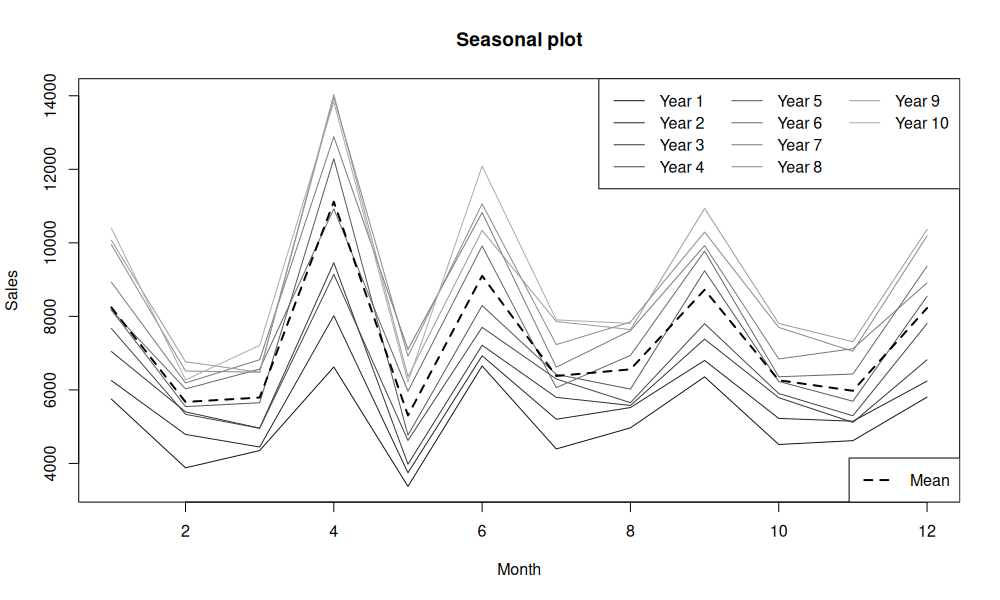
Here is a curious idea: if we can somehow estimate the importance of trend/seasonal components for your data, you can use this in model building and forecasting. But how can we do this first step? Hans Levenbach has an answer with his simple EDA technique. Let me explain. The core idea is simple and neat. … Read more

On randomness and uncertainty

A weather forecaster rolling a dice

Everything is random! Your data, your model, its parameter estimates, the forecasts it produces, and even the minimum of the loss function you used. There is no such thing as a “deterministic” forecast – everything is stochastic! Whenever you work with data, you are working with a sample from a population. In some cases, this … Read more

Why do zeroes happen? A model-based view on demand classification

Why do zeroes happen?

I presented our current work with Anna Sroginis during my visit of IÉSEG School of Management, Lille, France last week. It was great to see my colleague and friend Sarah Van der Auweraer, and I enjoyed the discussion we had with people in her group related to forecasting and intermittent demand. You can see details … Read more

Model vs Method – why should we care?

Image of a model discussing a method

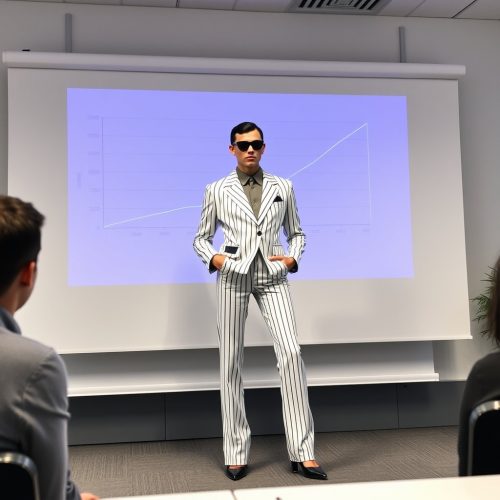
Image above depicts a fashion model making a presentation about a forecasting method. I like the forecast for the final period in that image… Over the last few years, I’ve seen phrases like “LightGBM model” or “Neural Network model” on LinkedIn many times, and the statistician in me shivers every time. So, I figured it’s … Read more

There is no such thing as an “assumption-free approach”

Spherical unicorn in a vacuum

One thing that bothers me when I read posts on social media or papers in peer-reviewed journals is the claim that a proposed approach is “assumption-free.” In forecasting, this is never true. Such an approach is like a spherical unicorn in a vacuum (see image above). Here’s why. Every model is a simplification of reality, … Read more

Structure vs. Noise: A Fundamental Concept in Forecasting

Structure vs Noise. Cloud in the shape of mushroom

One of the core ideas in statistics, which extends to many other fields including forecasting, is the concept of structure versus noise. You’ve probably heard of it, but it’s often overlooked by those without a strong quantitative background. So, let’s discuss. The core of the idea is that any data consists of two fundamental parts: … Read more

Complex-Valued Econometrics with Examples in R

Back in 2022, my father asked me to help him in amending and editing a monograph he wrote on the topic of “Complex-Valued Econometrics”. The original book focused on dynamic models, but after looking through the material and a thorough discussion, we decided to write something more fundamental. The monograph is based on the research … Read more

ISF2024: How to Bootstrap Time Series without Attracting Attention of Statisticians

On 1st July, I presented my ongoing work on time series bootstrap and its impact on prediction intervals at ISF2024 in Dijon, France. Abstract: Bootstrap is extensively used in statistics and machine learning for cross-sectional data to account for uncertainty about the data, model form, and parameter estimates. However, conventional methods may not be suitable … Read more

Statistical tests flowchart

In Lancaster University, I teach the module called “Statistics and Descriptive Analytics”, which is compulsory for master students of the programme “Business Analytics“. This year, the module has been delivered by Alisa Yusupova and me, and I have prepared a flowchart that should (hopefully) help students decide, which of the statistical tests to use in … Read more