Challenges related to seasonal data: shifting seasonality

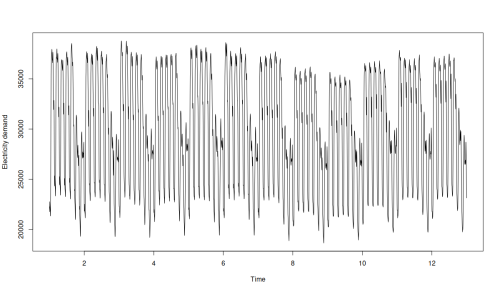
Hourly seasonal plot from the paper https://doi.org/10.1080/20476965.2023.2200526

There are many different issues with capturing seasonality in time series. In this short post, I’d like to discuss one of the most annoying ones. I’m talking about the seasonal pattern that shifts over time. What I mean is that, for example, instead of having the standard number of observations in the cycle (e.g., 24 … Read more

Naming conventions for seasonality types

In forecasting, the term seasonality doesn’t always mean what you think it does. It encompasses more than just patterns repeating from one season to the next. In fact, seasonality covers a wide range of periodic behaviors, and can have some issues associated with the naming conventions. Should we discuss? First things first: when we say … Read more

There is no such thing as “the best approach for everything”

If someone tells you that method X solves all problems and is the best one ever, they are either lying intentionally or do not fully understand what they are talking about. There is no such thing as “the best approach for everything”. Let me explain. Consider two products sold by retailers: ice cream and bread. … Read more

Model vs Method – why should we care?

Image of a model discussing a method

Image above depicts a fashion model making a presentation about a forecasting method. I like the forecast for the final period in that image… Over the last few years, I’ve seen phrases like “LightGBM model” or “Neural Network model” on LinkedIn many times, and the statistician in me shivers every time. So, I figured it’s … Read more

There is no such thing as an “assumption-free approach”

Spherical unicorn in a vacuum

One thing that bothers me when I read posts on social media or papers in peer-reviewed journals is the claim that a proposed approach is “assumption-free.” In forecasting, this is never true. Such an approach is like a spherical unicorn in a vacuum (see image above). Here’s why. Every model is a simplification of reality, … Read more

A paper to read over the Xmas holiday: Wang et al. (2023) – Forecast combinations: An over 50-year review

Christmas and the New Year are upon us, and I wanted to publish a celebratory post before taking a break. Instead of writing something educational, I decided to simply recommend a paper for you to read over the holidays – something you might have overlooked in the past couple of years. Here it is or … Read more

Intermittent demand: don’t try to predict WHEN it will happen

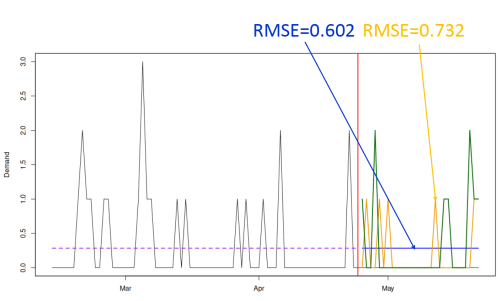
I’ve seen several times ML experts applying principles of classification for intermittent demand forecasting. For example, they try predicting, WHEN the demand will happen. This is not a very sensible thing to do. The featured image in this post shows two forecasting approaches: one that tries to predict when demand happens (the yellow line), and … Read more

What about the training/test sets?

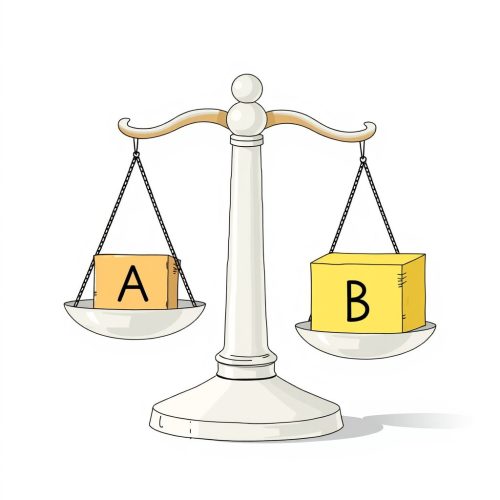
Train on a test site... maybe

Another question my students sometimes ask is how to define the sizes for the training and test sets in a forecasting experiment. If you’ve done data mining or machine learning, you’re likely familiar with this concept. But when it comes to forecasting, there are a few nuances. Let’s discuss. First and foremost, in forecasting, the … Read more

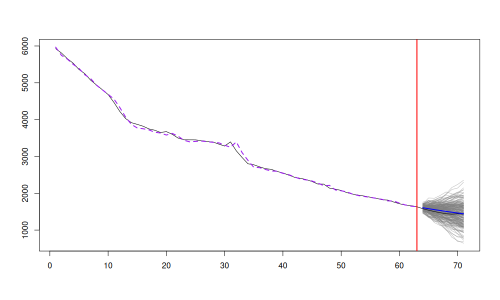
How to choose forecast horizon?

One of the questions my students sometimes ask is how to set the forecast horizon. The answer depends largely on the task at hand, but there are still some guidelines. First, the forecast horizon depends on data granularity. A “year ahead” forecast on monthly data means forecasting 12 steps ahead, while for daily data, it … Read more