smooth in python: ETS with model selection

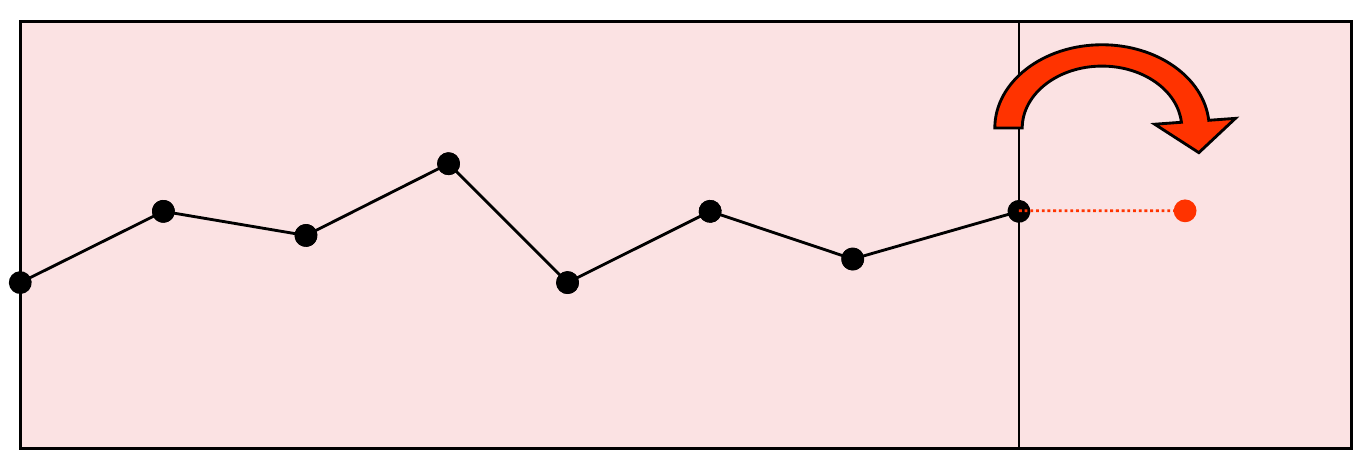
As some of you have heard, the smooth package is now on PyPI. So, I’ve decided to write a series of posts showcasing how some of its functions work. We start with the basics, ETS. ETS stands for the “Error-Trend-Seasonal” model or ExponenTial Smoothing. It is a statistical model that relies on time series decomposition … Read more

smooth forecasting with the smooth package in Python

Here is another piece of news I have been hoping to deliver for quite some time now (since January 2026 actually). We have finally created the first release of the smooth package for Python and it is available on PyPI! Anyone interested? Read more! On this page: Why does “smooth” exist? A bit of history … Read more

There’s no such thing as “deterministic forecast”

Sometimes I see people referring to a “deterministic” forecast, and I have some personal issues with this. Because if you apply a model to data then there is nothing deterministic about your forecasts! In many contexts, “deterministic” has a precise meaning: no randomness, no uncertainty. A deterministic solution to an optimisation problem (e.g. linear programming) … Read more

Forecasting Competitions Datasets in Python

Here is one small, unexpected piece of news: I now have my first package on PyPI! It’s called fcompdata, and let me tell you a little bit about it. When I test my functions in R, I usually use the M1, M3, and tourism competition datasets because they are diverse enough, containing seasonal, non-seasonal, trended, … Read more

Risky business: how to select your model based on risk preferences

A distribution of some error measures across models

What do you use for model selection? Do you select the best model based on its cross-validated performance, or do you use in-sample measures like AIC? If so, there is a way to improve your selection process further. JORS recently published the paper of Nikos Kourentzes and I based on a simple but powerful idea: … Read more