smooth for Python: Automatic order selection for MSARIMA
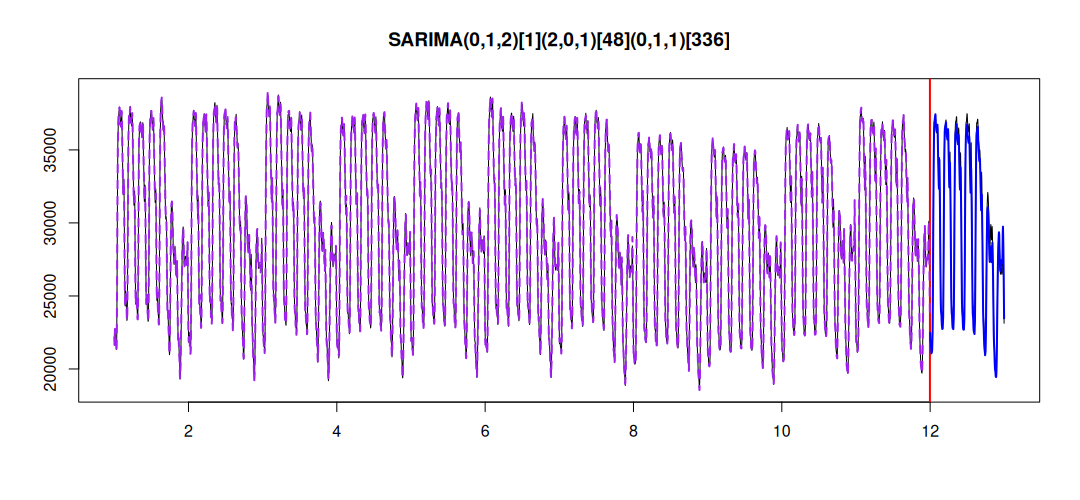
Multiple seasonal ARIMA selected for the half-hourly electricity demand series

Have you ever tried to identify ARIMA for your data? The old school Box-Jenkins methodology implies analysing ACF/PACF plots and selecting the orders iteratively. This approach has a fundamental flaw I discussed in one of my earlier posts. Brute force does not help either: even p ≤ 3, d ≤ 2, q ≤ 3 gives … Read more
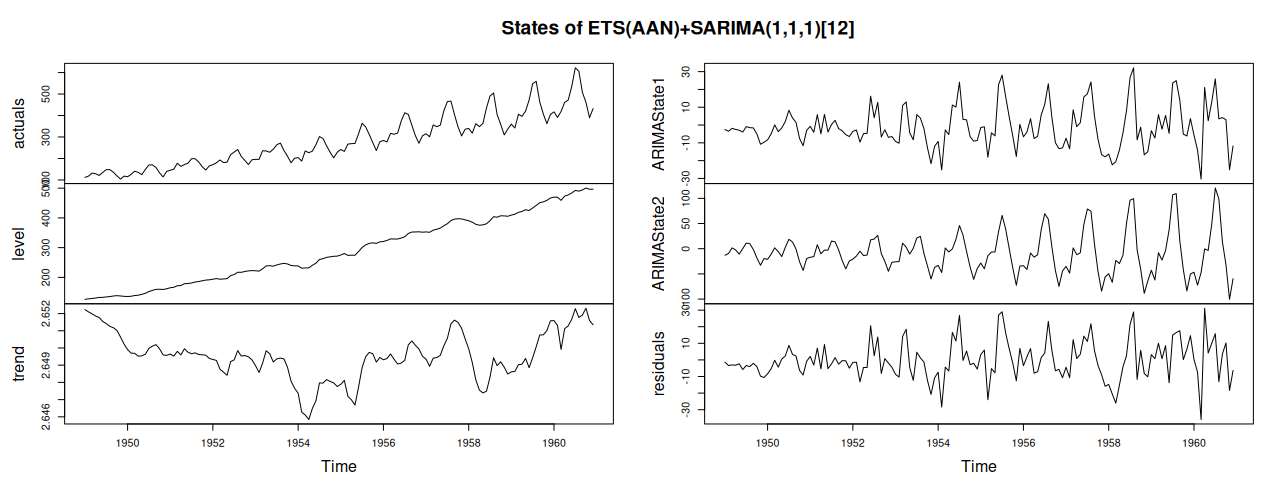
smooth in python: Multiple Seasonal ARIMA

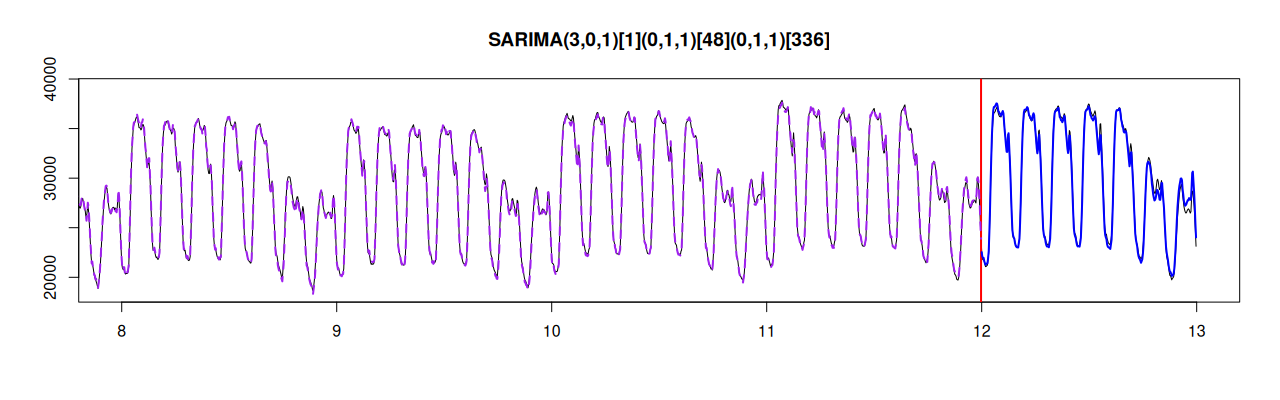
MSARIMA model fit and point forecast

ARIMA has been a workhorse for decades. But the standard implementations quietly hard-code assumptions: one seasonal cycle, Gaussian errors, regressors handled separately etc. This is fine for textbook well-behaved data. But what do you do when you face real data? The conventional implementations (statsmodels or pmdarima in Python, stats in R) do their job well: … Read more

smooth in python: Multistep losses

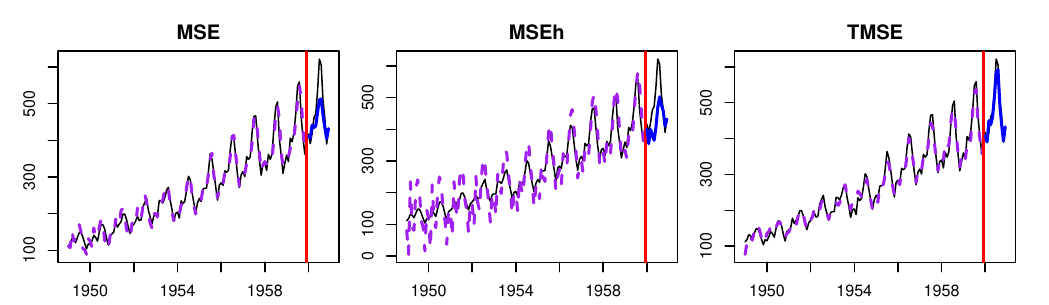
Example of fits of ETS with several multistep losses

Why train a forecasting model on one-step-ahead errors when you care about 10-step-ahead accuracy? This is the core motivation behind multistep losses in dynamic models. This has connection with the so-called “direct forecasting strategy”. And here what it is and how to work with it in Python. Conventional maximum likelihood estimation minimises one-step-ahead errors. It … Read more

ISF2026: PTS Taxonomy of Multiple Source of Error State Space Models for Demand Forecasting

This time, at ISF2026, I presented the paper that I have worked on together with Juan Ramon Trapero and Diego Pedregal. The idea of the paper is to introduce a taxonomy of the models in the Multiple Sources of Error (MSOE) framework. In the Single Source of Errors one, there is ETS, in the MSOE, … Read more

stick function for the EDA in time series

You have probably seen my post about the STI classification of Hans Levenbach (this one). Well, I’ve decided to implement it, and it has landed in the greybox package for R/Python. What’s greybox? It is a package for statistical modelling focusing on forecasting and time series analysis. I created it back in 2018 to split … Read more

smooth in python: Non-normal distributions in ETS/ARIMA

So, you know quite well that the normal distribution is one of the most popular distributions in statistics. The reasons are manifold, including convenience for the academic community and the fact that it is taught in every single statistics course in the world. But what if we don’t want to be normal? There are situations … Read more

smooth in python: multiple seasonal ETS

Another interesting case in demand forecasting is the high frequency data. For example, if you work with demand on daily level, you might notice that demand increases every Monday but also exhibits proper seasonal fluctuations (e.g. decline every Winter). What do you do in this case? One of the solutions (old but gold) is the … Read more

smooth in python: ETS with explanatory variables

We continue our series of posts on the functions from the smooth package for Python/R. Today we will see how to enhance your exponential smoothing with explanatory variables. What? Yes, you heard me! Let’s dive in! We all know that in real life sales don’t just evolve over time on their own. Any univariate model, … Read more

smooth in python: ETS forecast combination

Last time we saw how to do automated model selection using the ES function from the smooth package. Now I want to show how to produce combined forecasts from ETS. Why bother? There is a vast body of literature on forecast combinations (read this great review). The main idea is that you should not put … Read more